We’ve all been there. You type a brilliant prompt into an AI image generator — “A photorealistic astronaut riding a cosmic whale through a nebula” — and then you wait. And wait.
As powerful as models like DALL·E, MidJourney, and Imagen are, they’re massive, energy-hungry giants that live in the cloud. They need huge servers, high-speed internet, and a lot of patience.
But what if generating stunning AI art didn’t require a supercomputer?
What if it could happen instantly, privately, and right on your phone?
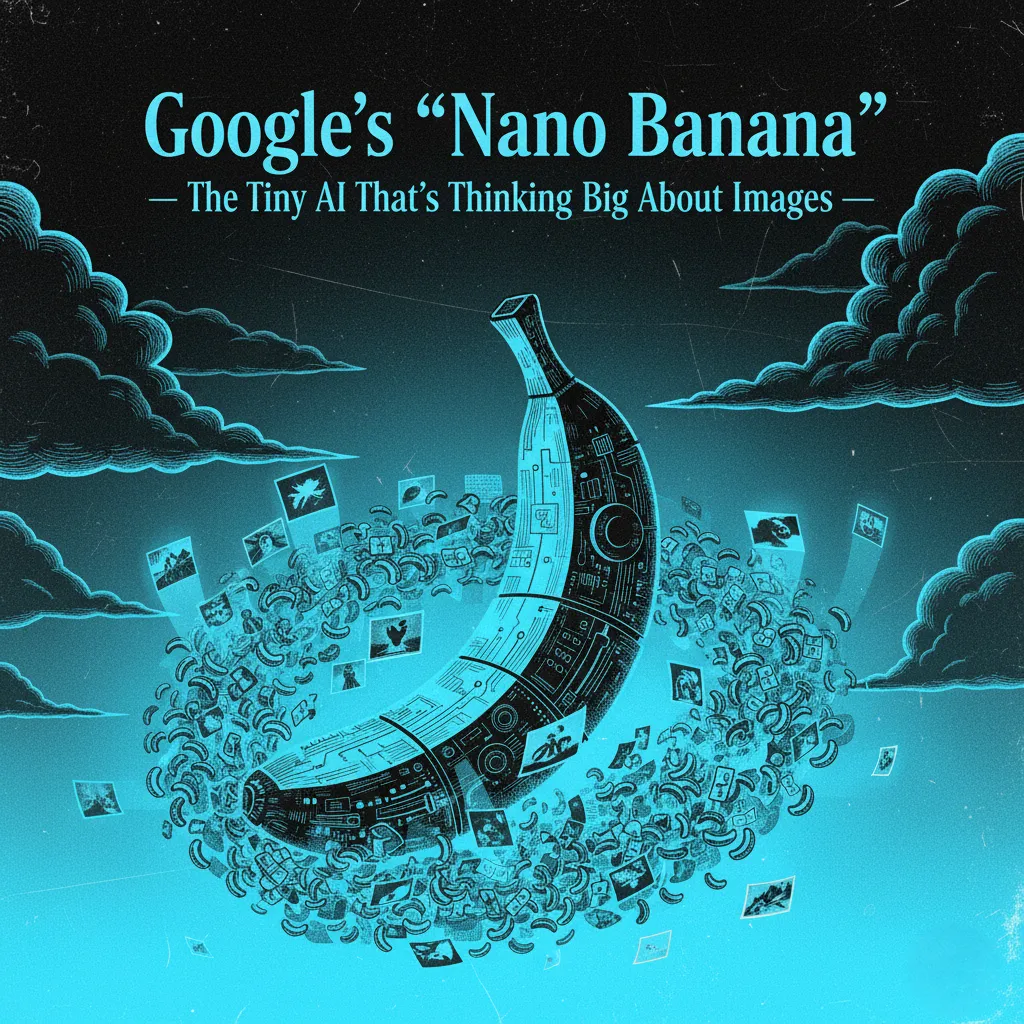
That’s the promise behind Google’s new lightweight image generation model: Nano Banana.
Unlike giant models measured in billions of parameters, Nano Banana takes a radically different approach: efficiency.
It’s designed to run directly on the chips inside everyday devices — phones, laptops, even tablets — without depending on the cloud.
How? Through a revolutionary idea we’ll call Semantic Compression.
Current Models (Printer):
Today’s image models act like printers. They “print” images pixel by pixel, relying on massive libraries of pixel patterns. That makes them huge and slow.
Nano Banana (Artist):
Instead of memorizing pixels, it learns concepts. It doesn’t need a million photos of cats — it understands “catness” — whiskers, pointy ears, feline eyes.
So when you say “a sad cat in the rain”, it activates the concepts cat + sadness + rain and creates a new image — just like a human artist sketching from an idea.
An instant, on-device model like Nano Banana could unlock possibilities we’ve only imagined:
While “Nano Banana” is a fun name, it represents a serious shift in AI.
The future isn’t just about bigger models; it’s about smarter, faster, and smaller ones.
This movement — often called AI at the Edge — relies on techniques like model quantization and knowledge distillation to shrink powerful models so they can run anywhere.
It’s a reminder that in technology (and in life), sometimes less truly is more.
Question:
If you had an instant, private, on-device AI image generator — what’s the very first thing you’d create?
Subscribe to our newsletter!